Short answer
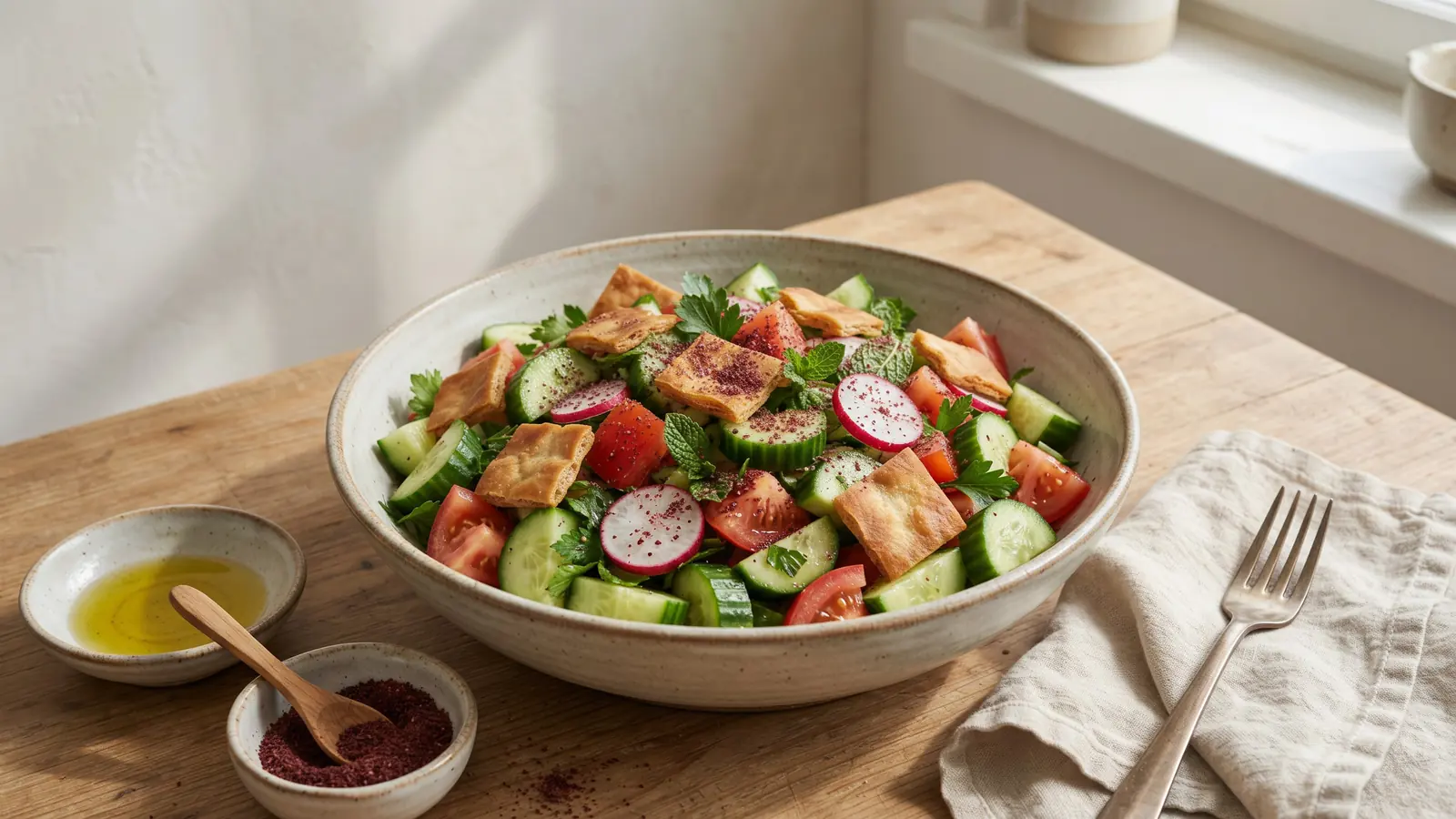
Fattoush salad is a Levantine salad of chopped cucumbers, tomatoes, radishes, lettuce and herbs, tossed with toasted or fried pita pieces and a dressing of lemon, olive oil and sumac. The bread is added at the last moment to stay crisp.
Fattoush salad is a Levantine salad of chopped cucumber, tomato, radish, lettuce and herbs, tossed with toasted or fried pita pieces and a dressing of lemon juice, olive oil and sumac. The bread goes in at the last moment so it stays crisp.
What is fattoush salad?
Fattoush is a bread salad from Lebanon, Syria and neighboring countries, made to use stale flatbread. Its name is often spelled fattoush or fattush, and it comes from an Arabic word linked to crumbs.
Fattoush is part of a family of bread-based salads and soups across the Mediterranean, such as Italian panzanella. In Lebanon it appears at most meze tables, next to tabbouleh, hummus and grilled meat.
What ingredients go in fattoush?
Fattoush needs cucumbers, tomatoes, radishes, romaine lettuce, scallions, fresh mint and parsley, toasted pita, sumac, lemon, olive oil and salt. Purslane is a traditional green when it can be found.
- 2 cups romaine lettuce, chopped
- 2 cucumbers, diced
- 3 tomatoes, diced
- 4 radishes, sliced
- 3 scallions, sliced
- 1/2 cup chopped parsley and 1/4 cup mint
- 2 pitas, toasted or fried
- Optional: purslane, green pepper, pomegranate seeds
How do you make the fattoush dressing?
The fattoush dressing is lemon juice, olive oil, garlic, sumac, salt and a pinch of dried mint, whisked together. Pomegranate molasses is a common addition.
Whisk 1/4 cup lemon juice, 1/4 cup olive oil, 1 crushed garlic clove, 1 tablespoon sumac, 1 teaspoon pomegranate molasses and a pinch of salt. Taste it and adjust: it should be tart and a little sweet. Make it ahead and keep it in a jar, since the garlic and sumac mellow with a short rest.
How do you make crisp pita for fattoush?
You make crisp pita by splitting it, brushing it with oil and baking at 400°F for about 8 minutes, or by frying pieces in hot oil until golden. Both give a crunchy bread.
- Split the pita in half and cut it into 1-inch pieces.
- Toss with olive oil and a pinch of salt.
- Bake on a tray, turning once, until golden and hard.
- Cool fully before adding to the salad.
Sprinkle sumac on the hot pita for extra flavor. Fried pita is richer and more traditional, and baked pita is lighter.
When should you add the pita?
Add the pita to fattoush just before serving, after the dressing, so it stays crunchy. If it sits in the dressing, it softens in a few minutes.
Some people like a mix of crisp and soft pieces, so they toss the salad and let it sit for about five minutes. For a party, serve the pita in a bowl on the side and let guests add it. Leftover dressed salad will be soggy, so it is better to keep parts apart.
What is sumac and what does it do?
Sumac is a tart, deep red spice made from dried, ground sumac berries, and it gives fattoush its signature lemony tang. It is used in the dressing and sprinkled on top.
Sumac is common in Levantine, Turkish and Persian cooking, where it goes on kabobs, rice, onions and salads. It is sour without adding liquid, which keeps the dressing from watering the salad. Buy it ground, in a sealed jar, and keep it away from light.
Fattoush vs tabbouleh vs Greek salad: what is the difference?
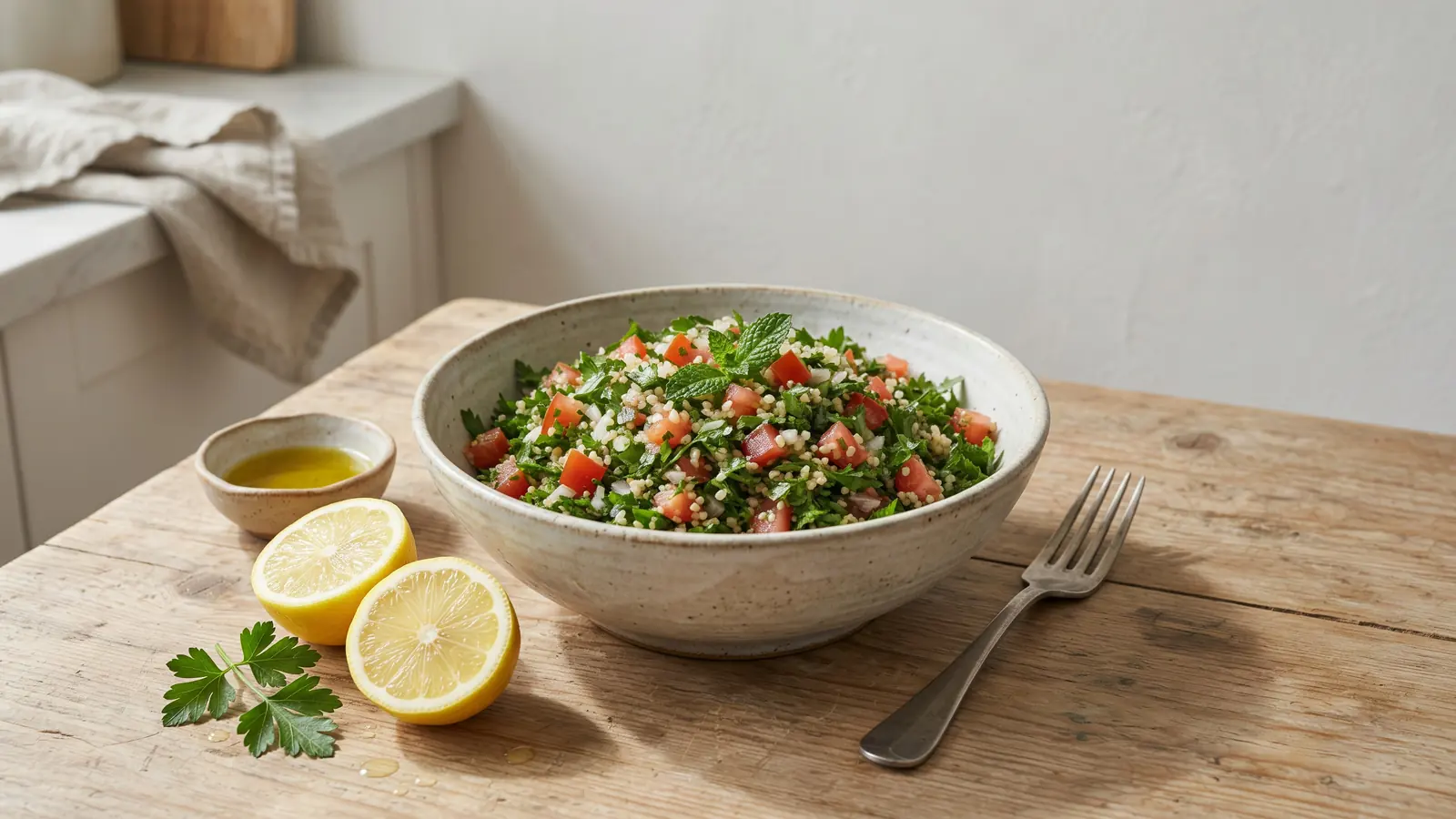
Fattoush is a mixed vegetable salad with crisp pita and sumac. Tabbouleh is a parsley and bulgur salad, and Greek salad is a feta, olive and tomato salad.
| Salad | Main base | Dressing | Special element |
|---|---|---|---|
| Fattoush | Lettuce, cucumber, tomato | Lemon, sumac, oil | Crisp pita |
| Tabbouleh | Parsley | Lemon, oil | Fine bulgur |
| Greek salad | Tomato, cucumber, olives | Olive oil, oregano | Feta |
| Salad Shirazi | Cucumber, tomato, onion | Lime or lemon, mint | Dried mint |
Can you serve fattoush with other dishes?
Fattoush suits grilled chicken, kabobs, falafel, rice and stews, because its sourness cuts through rich food. It is a side or a light lunch.
Serve it with grilled meat or falafel, or alongside hummus and bread. In a Persian meal, it would sit next to rice and a stew. A big bowl suits a sharing table.
What can you add to fattoush?
You can add pomegranate seeds, green pepper, purslane, grilled chicken or chickpeas to fattoush. The basic salad is flexible, as long as it stays sour and crunchy.
- Purslane: the traditional green, with a lemony, slightly juicy crunch.
- Pomegranate seeds: sweet bursts that suit the molasses dressing.
- Chickpeas: make it a more filling lunch.
- Grilled chicken: turns it into a main course.
- Green pepper or cabbage: extra crunch.
What are the mistakes to avoid with fattoush?
The mistakes to avoid are soft bread, a flat dressing and cutting the vegetables too large. Each takes away from the freshness of the salad.
| Mistake | Result | Fix |
|---|---|---|
| Adding pita early | Soggy bread | Add at the last minute |
| Too little sumac or lemon | Flat taste | Taste and add more |
| Large chunks | Hard to eat | Dice into bite-size pieces |
| Wet lettuce | Diluted dressing | Spin it dry |
How long does fattoush keep?
Fattoush keeps for about a day if the parts are stored separately: the vegetables and dressing in the refrigerator, the pita in an airtight container at room temperature. A dressed salad will go soft within an hour.
Chop the vegetables ahead, but cut the tomatoes last and pat them dry. Keep the sumac dressing in a jar for up to three days. Combine all the parts only when the table is ready.
Where can you find fattoush ingredients near Oskoo Market?
Oskoo Persian & Mediterranean Market in Bellevue is a grocery store, and Atly describes it as selling Persian, Turkish and Mediterranean foods, including fresh bread, pastries and spices. Yelp reviewers mention fresh produce.
The guide has no product list, so it cannot say that sumac, pita or pomegranate molasses is in stock. Call (425) 746-3061 to ask. The hours and location page and the FAQ have the details. This guide is independent and takes no orders.
Common questions
What does fattoush taste like?
Fattoush tastes bright, tangy and fresh, with lemon and sumac sourness, herbal mint and parsley and crunchy pita. The pomegranate molasses variant adds a deeper sweet-sour note to the dressing.
What is sumac?
Sumac is a deep red powder made from dried berries of the sumac shrub. It tastes tart and lemony, and it is used in Levantine and Persian cooking on salads, kabobs, rice and in dressings.
Can I make fattoush ahead of time?
Chop the vegetables and make the dressing up to a day ahead, and keep them apart. Fry or bake the pita separately. Toss everything together just before serving, so the bread stays crunchy.
What can I use instead of pita for fattoush?
Any thin flatbread works, such as lavash or naan, cut and baked until crisp. Day-old bread also works. A plain thin cracker is a last resort, but it lacks the chew of toasted pita.
Is fattoush the same as tabbouleh?
No. Tabbouleh is mostly parsley with bulgur, and fattoush is a mixed vegetable salad with crisp pita and sumac. They are often served together as part of a Levantine meze.
Before you go, check the Oskoo Persian Mediterranean Market guide for the current hours and the menu.
This article is general information from an independent guide, not from Oskoo Persian & Mediterranean Market itself. For the store’s current details see hours and location.